
Lincoln Root Zone Calculation for TPZ Fencing: Compliance Guide
Placer Temp Fence provides essential guidance on Root Zone Calculation for TPZ Fencing to ensure construction compliance across Lincoln, CA. From the historic streets of Downtown Lincoln to residential areas near Glen Edwards, we help contractors protect vital tree systems. Avoid costly municipal penalties by implementing precise fencing around critical root zones, preserving local greenery near landmarks like Foskett Regional Park.
Understanding Root Zone Protection in Tree Preservation Zones
When we're setting up tree protection zones in Lincoln, precision matters more than anything. Root zone calculations aren't just paperwork — they're about protecting living infrastructure during construction. We've learned through years of experience that every tree's critical root zone requires careful measurement and strategic fencing to prevent long-term environmental damage. Our approach starts with understanding each tree's unique structural requirements, using industry-standard measurement techniques that respect both botanical science and construction needs.
Calculation Steps
- Identify critical root zones before fencing installation
- Measure tree diameter at breast height (DBH)
- Calculate protection radius using industry standard formulas
- Mark TPZ boundaries with high-visibility marking
- Verify compliance with local tree preservation ordinances
| Tree Diameter (inches) | Protection Radius (feet) |
|---|---|
| 6-12 | 6 |
| 13-24 | 12 |
| 25-36 | 15 |
| 37+ | 20 |
Root Zone Calculation for TPZ Fencing in Lincoln, CA
Root Zone Calculation is a quantitative assessment method that establishes the mandatory protective radius around trees on construction sites. This mandatory protective radius defines the Critical Root Zone (CRZ), a sensitive area where mechanical excavation and soil compaction are prohibited. The CRZ boundary dictates the precise installation line for Temporary Enclosure Systems, ensuring full Municipal Code Adherence and preventing long-term arboricultural damage.
Key Terminology
- Tree Protection Zone (TPZ)
- The designated area around a tree, based on root spread, that must be preserved during fencing installation to avoid root damage, especially in neighborhoods like Glen Edwards.
- Root Zone Radius
- The calculated distance from the base of a tree trunk defining the TPZ boundary, often proportional to the tree’s diameter at breast height, used to protect roots from excavation or fencing pressure.
- Temporary Protective Fencing
- Fencing installed around the TPZ to restrict access and prevent soil compaction or damage, commonly used on construction sites near Lincoln Meadows and Old Town Residential.
- Soil Compaction
- The compression of soil which reduces pore space, adversely affecting root oxygen and water uptake; fencing around TPZ minimizes this risk especially near Lincoln Brand Feeds.
- Local Tree Protection Ordinance
- City of Lincoln regulations requiring TPZ fencing to comply with standards during ground disturbance, with enforcement relevant in areas such as Glen Edwards.
- Fencing Base Options
- Methods like concrete or steel bases that allow fence stability without ground penetration, crucial for TPZ compliance in sensitive locations like Old Town Residential.
In Simple Terms
Root Zone Calculation defines the radius around a tree that must be fenced off to protect roots during nearby construction or site work. In Lincoln, CA neighborhoods like Glen Edwards and Lincoln Meadows, Placer Temp Fence installs temporary fencing based on these calculations, using non-invasive bases to avoid soil compaction or root damage. Compliance with local tree protection ordinances ensures trees near landmarks like Lincoln Brand Feeds remain unharmed.
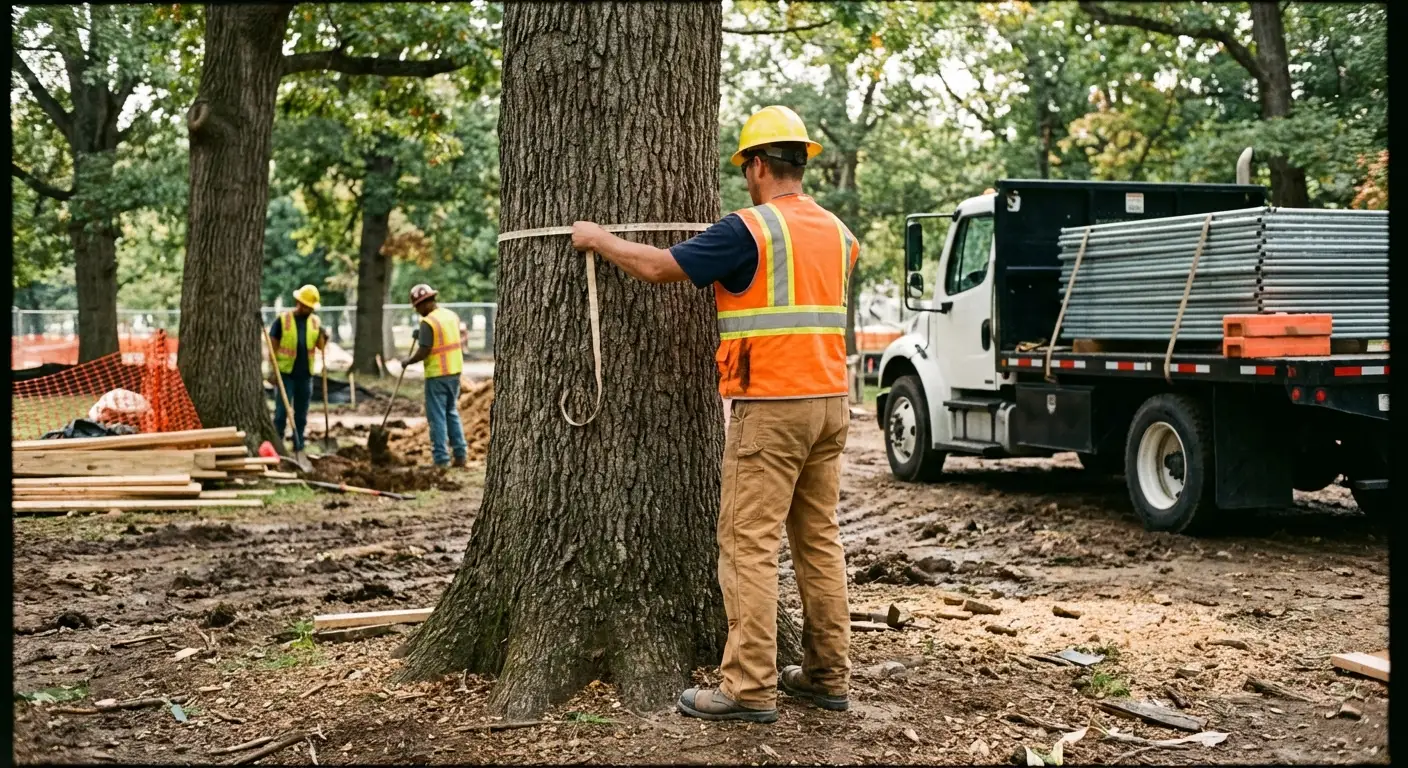
Root Zone Calculation for TPZ Fencing: Compliance Guide
Detailed root zone calculations ensure TPZ fencing meets local regulations near Lincoln High School and residential areas in Lincoln, CA.
| Root Zone Radius | Calculate using tree species-specific formulas, generally 1.5 feet radius per inch of trunk diameter. |
|---|---|
| Fence Placement | Position fencing outside the calculated root zone to prevent root damage and maintain tree health. |
| Soil Compaction Avoidance | Ensure fencing installation prevents soil compaction within the root zone to comply with environmental standards. |
| Inspection Requirements | Conduct pre-installation and post-installation inspections to verify fencing does not encroach on root zones. |
| Compliance Standards | Follow OSHA and local environmental regulations specific to TPZ fencing near institutional and residential sites. |
| Cost Range | $200-$600 per week depending on fence length and root zone complexity. |
| Signage Interval | Every 30 linear feet |
Root Zone Calculation for TPZ Fencing Compliance
Ensure TPZ fence stability with accurate root zone calculations in Lincoln.
Common TPZ Fencing Mistakes We See on Lincoln Sites
When we set TPZ fencing around trees in Lincoln, CA, the math matters as much as the panels. We’ve seen root damage start with a small measuring error, a post in the wrong place, or one wet week near McBean Memorial Park.
Measuring from the trunk flare instead of the actual root protection zone edge
That mistake shrinks the fenced area and leaves feeder roots exposed to trenching, compaction, and grade cuts. I’ve seen it turn a clean job into a tree decline claim after a crew thought the trunk line was enough.
We measure from the trunk correctly, then set the TPZ boundary out where the roots actually live and keep panels outside that line.
Assuming every tree in Lincoln Meadows or Teal Hollow needs the same radius
Uniform numbers sound easy, but they ignore species, trunk size, canopy spread, and site stress. On tight residential pads, that shortcut usually puts fencing too close and pushes equipment right into the root zone.
We size each TPZ from the tree’s condition and location, then adjust for slopes, hardscape, and access lanes before we set a panel.
Placing posts and anchors inside the protected zone
A post drive or anchor hole looks small on paper, but it cuts roots, opens paths for disease, and weakens stability after rain. In wet ground, that damage spreads fast when the soil settles and smears around the wound.
We use tree protection zones and keep all hardware outside the marked boundary, with concrete steel bases only where the site allows it.
Ignoring runoff, mud, and erosion after winter weather
When storm water runs through a fenced tree area, it strips mulch, exposes roots, and undercuts the fence line. I remember the heavy rains that hit Lincoln Meadows back in 2008; the ground moved enough to turn a decent setup into a leaning mess by the next morning.
We plan TPZ fencing with drainage in mind, add tree protection ordinances and SWPPP dust compliance where needed, and brace low spots before the soil starts moving.
Treating the fence like a visual reminder instead of a real exclusion barrier
A loose line of panels won’t stop equipment, material drops, or foot traffic from crossing into the root zone. Once a loader skirts the edge or a pallet lands too close, the damage shows up later as stress, dieback, and costly rework.
We build the line like a barrier, not a suggestion, using chain link panels, wind load resistance, and fence blow over prevention details that hold up in open sites.
Root Zone Fencing That Actually Protects Trees
After 15 years installing TPZ fencing across Lincoln, we've learned tree protection isn't about slapping up orange mesh—it's understanding how roots grow under your feet. Our crew carries soil probes to check compaction levels and knows which species need extra breathing room (looking at you, valley oaks). We'll argue with excavators to save a 2" feeder root because that's what keeps trees alive when the bulldozers arrive. It's not just compliance; it's leaving the site healthier than we found it.
-
Measure Twice, Install Once
We always double-check root zone calculations against the city's tree protection ordinances before driving the first post. Our crew carries laser measurers and printed diameter tapes for accuracy.In PracticeLast spring near Old Town Residential, we caught a 6" discrepancy that saved a heritage oak.
-
Flexible Footprint Planning
TPZ fencing often needs to adapt to existing roots and terrain. We use modular panels and wheel-assisted gates to avoid cutting through critical root zones.In PracticeAt Downtown Lincoln, we rerouted 300 feet of fencing to preserve a sycamore.
-
Ground-Friendly Bases
Instead of deep-driven posts, we opt for surface-mounted bases in sensitive root areas. Our weighted systems meet wind requirements without soil penetration.In PracticeAlong Auburn Ravine Park, we protected cottonwood roots with 120 lb. steel bases.
-
Daily Zone Audits
Root protection zones shift during construction. We walk the perimeter each morning to check for soil compaction or encroachment, adjusting barriers as needed.In PracticeDuring the Lincoln Meadows project, we relocated fencing three times as grading progressed.
Every fence protects what's above and below ground.
Root Zone Calculation and TPZ Fencing Standards
Field protocols for measuring critical root zones and installing protective fencing to meet Lincoln, CA municipal environmental compliance requirements.
How do Lincoln city inspectors determine TPZ boundaries?
Inspectors measure the Critical Root Zone based on trunk diameter. Field crews in Teal Hollow mark these boundaries using physical stakes to prevent soil compaction near established trees during site preparation.
What fencing materials meet local arboriculture standards?
Placer Temp Fence installs temporary mesh barriers that prevent heavy machinery from entering the root zone. This method complies with standard practices observed near Foskett Regional Park to protect native vegetation.
Does root zone encroachment affect site permits?
Encroachment triggers violations under local land use regulations. Crews working in Downtown Lincoln Historic District must verify all fence lines sit outside the calculated drip line to avoid permit holds.
How is soil compaction prevented within the TPZ?
Workers install lightweight fencing to restrict foot traffic. This technique maintains soil porosity for trees located near Glen Edwards Middle School, ensuring air and water reach the root systems effectively.
What happens if a fence line crosses a root zone?
Field supervisors re-calculate the radius using the tree's caliper measurements. Correcting the fence placement ensures compliance with local environmental standards before the next inspection cycle occurs on the job site.
Are seasonal changes relevant to TPZ calculations?
Tree canopy changes affect the drip line radius. Field teams adjust fencing in areas like Teal Hollow to account for seasonal growth patterns and ensure the entire root zone remains protected.
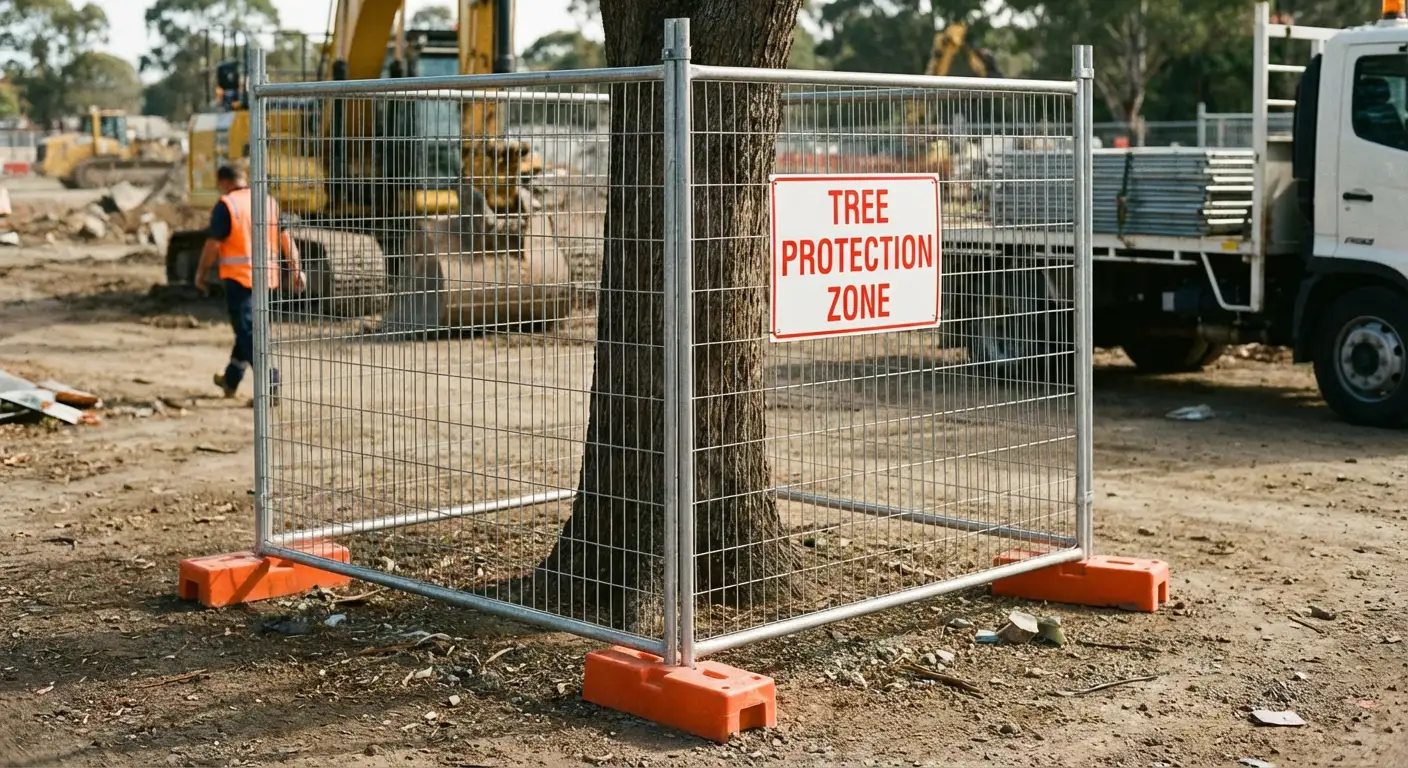
Root Zone Calculation Compliance for TPZ Fencing
Ensure accurate root zone calculations for TPZ fencing installations in Lincoln, CA, meeting OSHA and local regulations effectively.
Experienced in OSHA-compliant TPZ fencing installations within Lincoln area